

Singapore Airlines’ long-awaited new First Class and Business Class seats are taking longer to arrive than originally planned. The airline had announced the retrofit in 2024, and pegged the cost of the whole exercise at Singapore Dollars 1.1 billion.
Singapore Airlines’ new A350 product to arrive in 2027
Singapore Airlines confirmed to MileLion that the entry into service of its next-generation cabin products has been delayed to the first quarter of 2027, rather than the previously targeted second quarter of 2026.
The delay impacts the airline’s ambitious SGD 1.1 billion retrofit programme for 41 Airbus A350-900 aircraft, which was announced in late 2024 as a solution to the continued delays of the Boeing 777-9 programme. Rather than waiting indefinitely for the 777X, Singapore Airlines chose to introduce its future premium cabins to its existing A350 fleet.
According to the airline, the revised timeline is due to “industry-wide supply chain constraints” and delays in the certification of one of the new seat products. There are no surprises there, since we have seen all sorts of new products and existing products being held up in the certification supply chain (a term I’ve just ended up creating), given we have seen Lufthansa’s Allegris rollout being delayed, Air India’s 787-9 Adient Aerospace Business Class seats not being fully certified and now this.
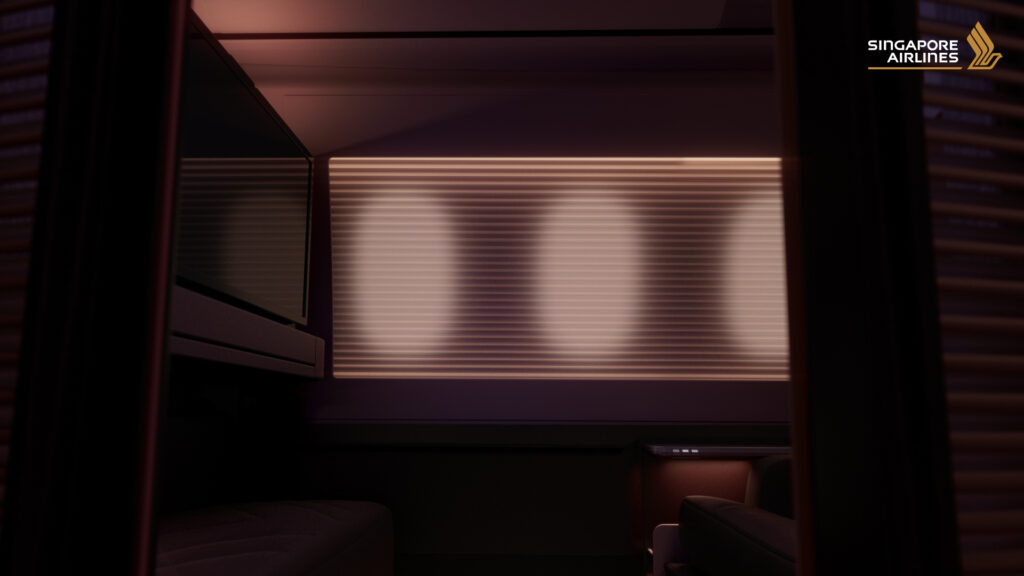
Singapore Airlines First Class (to come)
Singapore Airlines had initially intended to unveil the new seats in H1 2026, with the first retrofitted Airbus A350-900 long-haul aircraft entering service by mid-2026. Ultra Long Range (ULR) aircraft flying routes such as Singapore–New York and Singapore–Los Angeles were expected to follow later.
The new cabins are expected to include:
- An all-new long-haul First Class product
- A redesigned Business Class seat with privacy doors
- Updated Premium Economy and Economy seats
- Next-generation KrisWorld in-flight entertainment
- New soft furnishings and onboard amenities
Notably, the ULR aircraft are also expected to gain First Class cabins for the first time, a major strategic shift for Singapore Airlines’ longest flights.
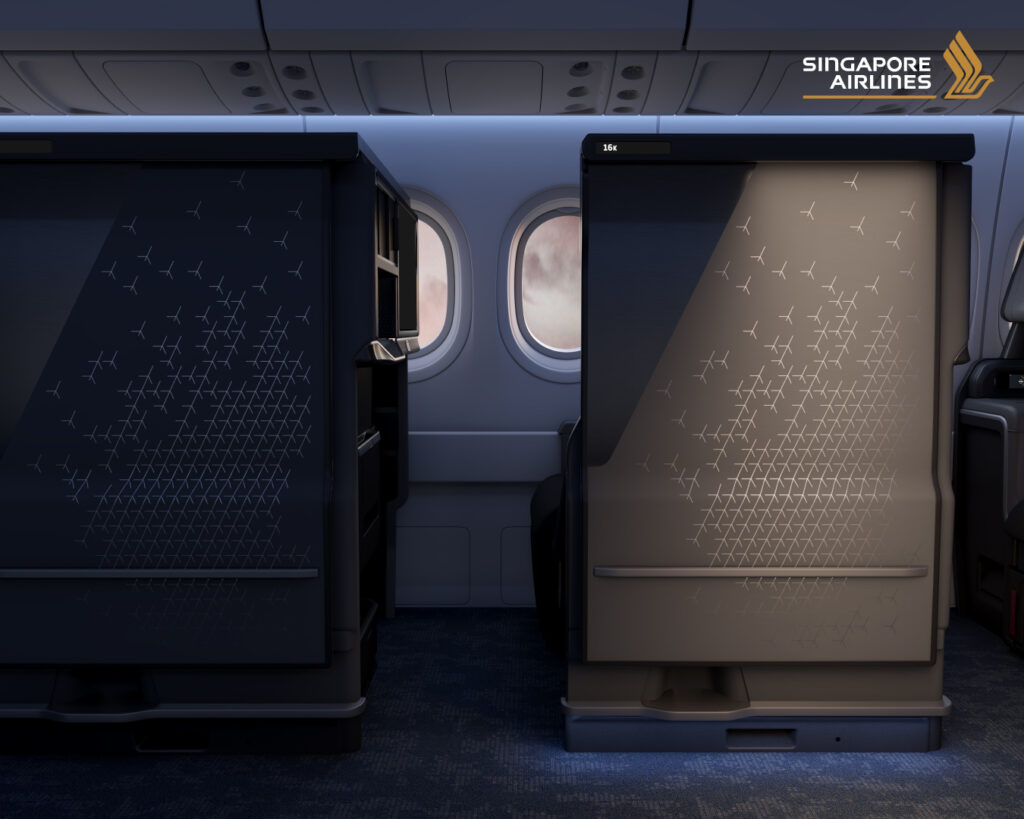
Singapore Airlines Business Class (to come)
For the A350-900 Long Haul Aircraft, the aircraft will retain the same number of seats in the Business Class and Premium Economy cabins, 42 and 24, respectively, but add five seats to the Economy Class cabin, increasing it from the current 187 seats to 192 seats. These extra seats might come at the expense of reduced legroom, galley space, or a smaller front cabin footprint.
It gets more interesting when the A350-900ULR is concerned. A first-class cabin will be added to the aircraft for the first time. The new cabin configuration will have 4 First-Class seats and 70 Business-Class seats (with Doors), compared to the current 67 seats. On the other hand, Premium Economy loses 36 seats, and the retrofit aircraft will have 58 Premium Economy seats, down from the current 94.
The Boeing 777X Domino Effect
The irony here is that these seats were originally designed for the Boeing 777-9 fleet, which has seen repeated certification and production delays. Here is an extract from the patent that Singapore Airlines filed, which shows the presence of six closed-door suites, with curved walls/separators.
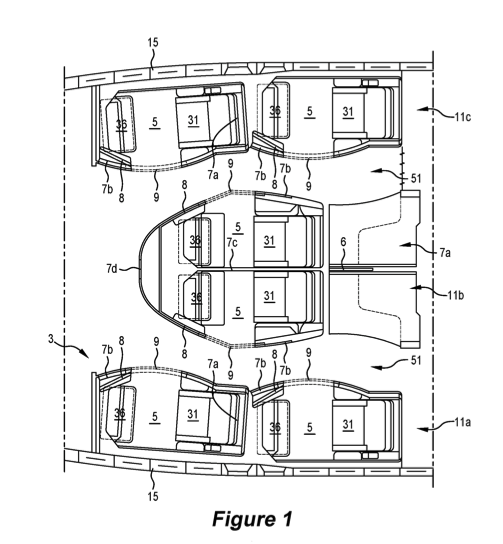
Singapore Airlines had once expected to launch its next-generation premium products on the 777-9 around 2021-22. Instead, the aircraft itself has not yet entered commercial service, forcing the airline to rethink its entire fleet and product strategy. By retrofitting the A350 fleet first, Singapore Airlines hoped to avoid having its flagship premium products arrive years late. But now, even that workaround has slipped.
Why This Matters
Singapore Airlines’ current long-haul Business Class seat debuted in 2013. While still spacious and highly regarded, it is increasingly showing its age compared with newer-generation products from carriers such as Qatar Airways, ANA, Air France, and even some US airlines.
The industry trend is now firmly centred around enclosed suites with doors, larger screens, wireless charging, Bluetooth audio, and more residential-style design language. Singapore Airlines has largely avoided incremental updates over the past decade, choosing instead to wait for a full generational leap. That leap is now at least another six months away.
What Happens Next?
Singapore Airlines says it still plans to formally unveil the new products sometime later in 2026. The first retrofitted A350-900 aircraft is now expected to enter service in Q1 2027, subject to regulatory approvals. The broader retrofit programme will continue through the end of the decade. When the first retrofit A350-900ULR will arrive is anyone’s guess. For now, passengers hoping to try Singapore Airlines’ next-generation premium cabins will need a bit more patience. And when these aircraft finally come around, they will also be equipped with Starlink for in-flight connectivity.
Bottomline
Singapore Airlines’ plans to retrofit the A350-900LH and the A350-900ULRs have shifted, most likely due to certification or supply chain issues with their new premium cabin seats. The plan was to put the first plane with the new seats in the air by June 2026; however, the timeline has now been moved to 2027.
What do you make of the delays regarding the retrofit?
Liked our articles and our efforts? Please pay an amount you are comfortable with; an amount you believe is the fair price for the content you have consumed. Please enter an amount in the box below and click on the button to pay; you can use Netbanking, Debit/Credit Cards, UPI, QR codes, or any Wallet to pay. Every contribution helps cover the cost of the content generated for your benefit.
(Important: to receive confirmation and details of your transaction, please enter a valid email address in the pop-up form that will appear after you click the ‘Pay Now’ button. For international transactions, use Paypal to process the transaction.)
We are not putting our articles behind any paywall where you are asked to pay before you read an article. We are asking you to pay after you have read the article if you are satisfied with the quality and our efforts.


Leave a Reply