

Emirates has never been shy about making big promises around passenger comfort. From onboard showers in First Class to its extensive retrofit programme, the Dubai-based airline has built its reputation on investing in the inflight experience. Now, it has turned its attention to the back of the aircraft.
The airline has unveiled what it calls the world’s first U-Dream Headrest, a redesigned Economy Class headrest that aims to eliminate one of the biggest annoyances of long-haul travel: trying to sleep while your head keeps falling to one side.
Emirates’ new U-Dream Headrest, designed with Safran
The concept is simple, but potentially effective. Instead of the conventional winged headrest that folds in from the sides, Emirates has designed a U-shaped structure that wraps around a passenger’s neck and head, providing support from both sides. The airline says the headrest can be adjusted vertically, tilted and shaped to suit passengers of different heights, creating a built-in neck pillow without having to carry one from home.
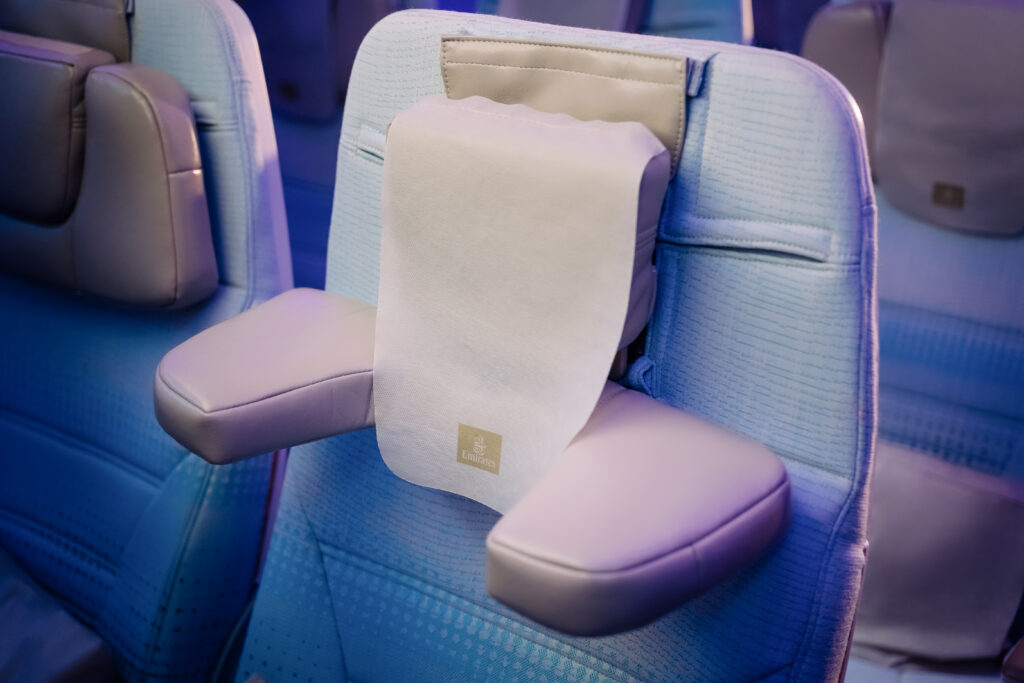
According to Emirates President Sir Tim Clark, the idea came from recognising that most Economy Class passengers struggle to sleep comfortably on long-haul flights.
“The U-Dream changes the game if the person wants to sleep – by supporting the neck in full. No more neck pillows needed.”
That is a bold claim, considering the travel neck pillow has become almost as common at airports as cabin baggage, especially with economy travellers.
Coming first to the A350 fleet
The new headrests won’t appear overnight across the Emirates fleet. They will first debut on the airline’s Airbus A350 aircraft by the end of 2026 before gradually being introduced on retrofitted Airbus A380s and Boeing 777s during 2027. Future Boeing 777X deliveries will also feature the new design from day one.
That means most passengers flying Emirates in the coming months will continue to see the familiar adjustable winged headrests that have long been a feature of the airline’s Economy cabin.
A genuinely useful innovation?
Every few years, airlines unveil a new seat feature that promises to transform Economy Class. Sometimes those ideas become industry standards, while others quietly disappear. Their peers at Etihad launched a winged economy-class headrest on the A380 and the 787s, where you could use one winged side as a pillow to sleep.
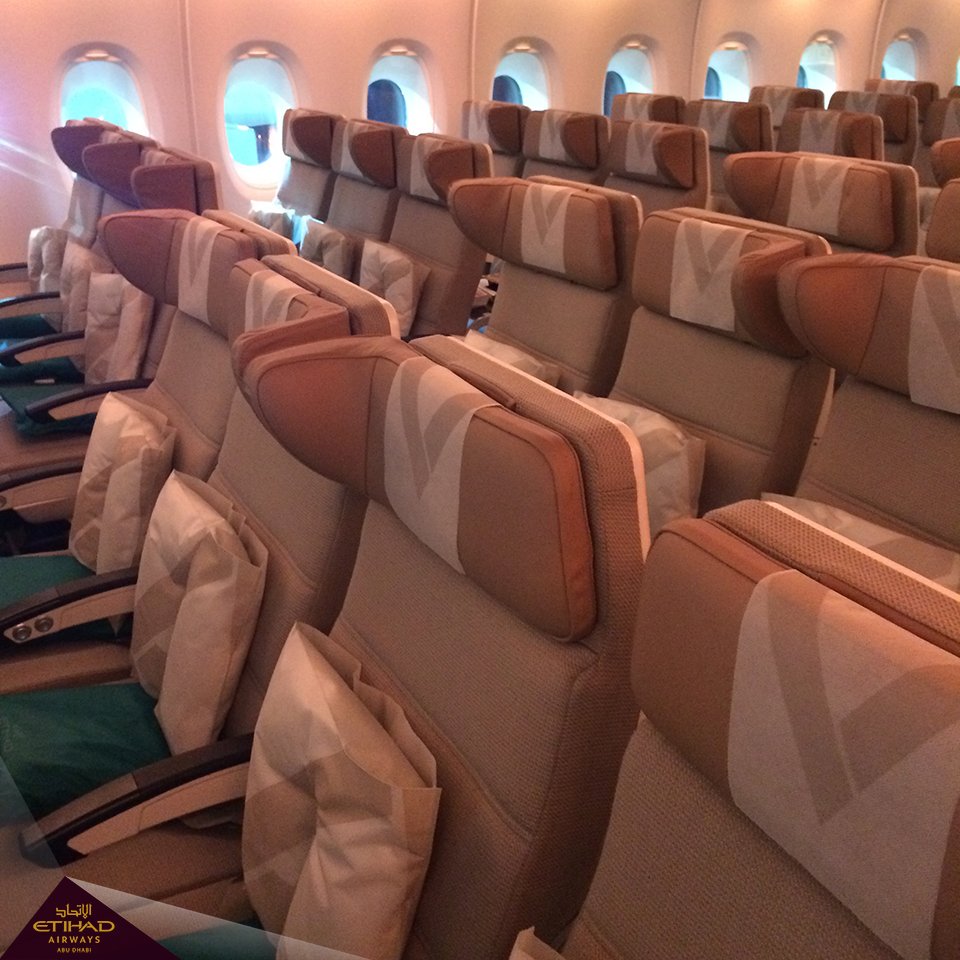
If the design works as advertised, it could finally make the traditional travel pillow redundant for many passengers. So, this is one of those ideas that looks sensible on paper, but the real test will come somewhere over the Indian Ocean, six hours into an overnight flight.
The devil will be in the details
Will the extra padding make the seat feel more restrictive? Can passengers comfortably wear headphones with the headrest wrapped around them? How well will it work for taller or shorter travellers? And perhaps most importantly, will it survive years of heavy airline use while still offering the same level of support? These are questions only real-world experience can answer.
Bottomline
Unlike flashy cabin announcements that add another gadget or screen, this is an attempt to solve a genuine pain point of flying Economy Class. Emirates has added a new type of headrest which holds the head in place for those who need to catch zzz when flying Economy Class. Whether Emirates has actually managed to replace the humble neck pillow remains to be seen, but the airline deserves credit for thinking about passenger comfort beyond simply adding more entertainment or USB ports. If the U-Dream headrest performs as promised, don’t be surprised if other airlines begin exploring similar designs over the next few years. Unless it is patented, which it most likely is.
What do you think of the Emirates U-Dream headrest?
Liked our articles and our efforts? Please pay an amount you are comfortable with; an amount you believe is the fair price for the content you have consumed. Please enter an amount in the box below and click on the button to pay; you can use Netbanking, Debit/Credit Cards, UPI, QR codes, or any Wallet to pay. Every contribution helps cover the cost of the content generated for your benefit.
(Important: to receive confirmation and details of your transaction, please enter a valid email address in the pop-up form that will appear after you click the ‘Pay Now’ button. For international transactions, use Paypal to process the transaction.)
We are not putting our articles behind any paywall where you are asked to pay before you read an article. We are asking you to pay after you have read the article if you are satisfied with the quality and our efforts.


Yes, real world experience would be conclusive but kudos to Emirates for being Emirates and taking steps in the right direction and giving their best shot always.