

One year after the tragic crash of Air India Flight AI171, investigators are expected to miss the anniversary deadline for issuing the final accident report, with key technical examinations still underway.
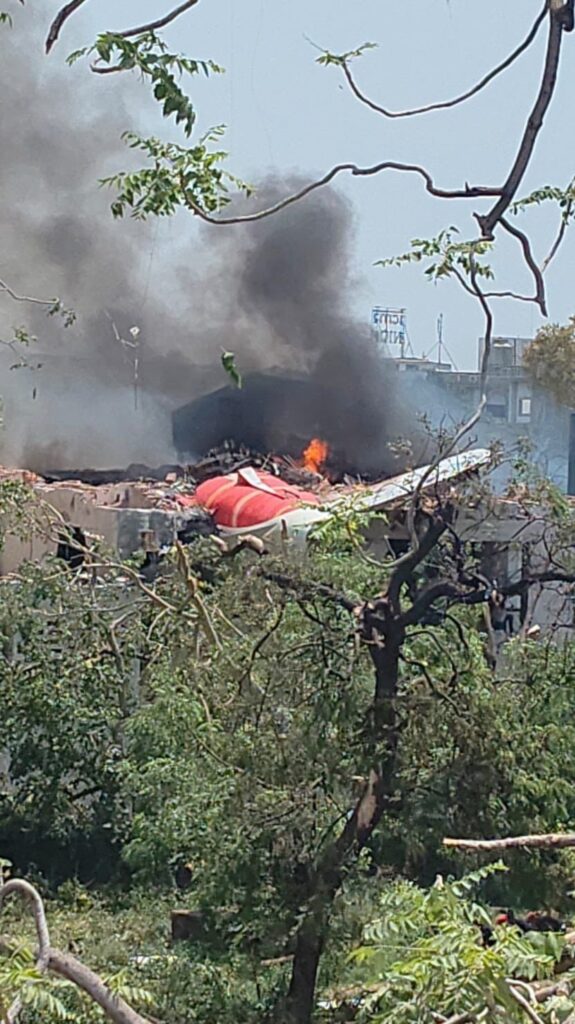
The crash of the Air India Boeing 787-8 Dreamliner operating from Ahmedabad to London Gatwick on June 12, 2025, remains India’s deadliest aviation accident in nearly three decades. The accident claimed 260 lives, including passengers, crew members and people on the ground.
According to Bloomberg, ahead of the first anniversary of the crash, the Aircraft Accident Investigation Bureau (AAIB) is still examining critical evidence, particularly relating to the aircraft’s engines and associated control systems. Investigators have reportedly not completed their analysis of the General Electric GEnx engines, prompting expectations that the final report will be delayed.
Why is the report being delayed?
Under ICAO Annex 13 standards, accident investigation authorities are expected to publish a final report within 12 months of an accident. However, complex investigations frequently exceed this timeline, especially when multiple international agencies, manufacturers and technical laboratories are involved. If a final report is not ready, investigators are expected to provide an interim statement outlining progress.
The AI171 investigation has involved participation from India’s AAIB, the US National Transportation Safety Board (NTSB), Boeing, GE Aerospace and the UK’s Air Accidents Investigation Branch.
Reports indicate that investigators have conducted extensive testing of the aircraft’s engine control systems, including examinations in France and further analysis of engine components at GE Aerospace’s Ohio facility in the United States. The ongoing work is understood to be one of the key reasons behind the delay.
The investigation has also come under fresh scrutiny following reports that one of the subject-matter experts associated with the probe has stepped away from the process. According to a report in The Economic Times, veteran Boeing 787 pilot R.S. Sandhu, who had been brought in to assist the AAIB’s flight operations group, has not participated in meetings since January after disagreements over the investigation process. While government officials have maintained that external experts are consulted only when required and are not expected to remain involved throughout the inquiry, the development has heightened concerns among pilot groups and industry observers about the investigation’s transparency. Sandhu’s reported departure is particularly notable because the flight operations group is responsible for examining pilot actions and operational factors, an area that has remained at the centre of debate since the preliminary report highlighted the movement of both engine fuel-control switches shortly after takeoff.
The unanswered question: Why did the fuel switches move?
The preliminary report released in July 2025 identified a sequence that stunned the aviation industry.
According to the AAIB’s initial findings, both engine fuel control switches moved from the RUN position to CUTOFF within seconds of takeoff, causing fuel flow to both engines to cease. The resulting loss of thrust caused the aircraft to crash shortly after departure from Ahmedabad.
Cockpit voice recorder data cited in the preliminary report suggested that one pilot questioned the other about cutting off the fuel supply, while the other pilot denied doing so. However, the preliminary report stopped well short of assigning blame or determining exactly how the switches moved.
While people have speculated on potential causes ranging from inadvertent action to technical malfunction or deliberate movement, the AAIB has repeatedly emphasised that no final conclusions have yet been reached and that the investigation remains ongoing.
Growing pressure from families
The delay comes amid growing frustration among victims’ families and aviation stakeholders seeking definitive answers.
Families of those who lost their lives have repeatedly called for transparency and the publication of the final findings. The sole survivor of the crash has also publicly urged investigators to reveal the full truth behind the accident.
The investigation has attracted intense global scrutiny because it involved the first fatal hull-loss accident in the Boeing 787 Dreamliner programme since the aircraft entered commercial service in 2011.
What happens next?
While expectations had initially centred around the June 12, 2026 anniversary as the likely publication date, current indications suggest that investigators may instead issue an interim update while technical examinations continue. Some suggest the final report could slip by several months.
For Air India, Boeing, GE Aerospace and the families of the 260 victims, the final report will be critical not only in determining the probable cause of the accident but also in identifying any safety recommendations that could prevent a similar tragedy in the future.
Until then, one of modern aviation’s most closely watched investigations remains unfinished.
Bottomline
The final investigation report into the AI171 crash is expected to be delayed beyond the first anniversary of the accident, as investigators continue detailed analysis of engine and control-system evidence. While the preliminary report established that both engines lost fuel supply seconds after takeoff, the crucial question of why that happened remains unanswered, ensuring the aviation industry’s attention stays firmly fixed on the AAIB’s eventual findings.
What do you think is the cause of the delay to AAIB’s final report?
Liked our articles and our efforts? Please pay an amount you are comfortable with; an amount you believe is the fair price for the content you have consumed. Please enter an amount in the box below and click on the button to pay; you can use Netbanking, Debit/Credit Cards, UPI, QR codes, or any Wallet to pay. Every contribution helps cover the cost of the content generated for your benefit.
(Important: to receive confirmation and details of your transaction, please enter a valid email address in the pop-up form that will appear after you click the ‘Pay Now’ button. For international transactions, use Paypal to process the transaction.)
We are not putting our articles behind any paywall where you are asked to pay before you read an article. We are asking you to pay after you have read the article if you are satisfied with the quality and our efforts.


Leave a Reply