

Air India, which began its transformation journey in 2022 following the airline’s privatisation, has faced a new setback. Campbell Wilson, the CMD of the airline, has resigned, it is reported.
Air India CMD Campbell Wilson steps down
Campbell Wilson, who joined Air India in 2022 after a lifetime spent at Singapore Airlines and its associate airline Scoot, stepped down as CMD last week, Indian newspaper Mint reports. Wilson was not supposed to be offered a new contract when his current one expired in 2027; however, he decided to punch out early, it seems. According to a media statement from Air India, Wilson told Chairman N. Chandrasekaran in 2024 that he planned to step down in 2026. He will remain in the role until his successor is announced and in place.
Wilson arrived at Air India to renew the airline and set in motion a 5-year transformation plan called Vihaan.AI. Under his leadership, the airline announced its 470-aircraft order (later topped up by another 100 aircraft). The airline’s new brand identity was launched, and the merger of Vistara into Air India and the consolidation of all LCCs into Air India Express were completed. The frequent-flyer programme was completely overhauled, and new features were introduced. The airline also refurbished the narrowbodies; however, work on the newly arriving aircraft and the widebody retrofits was slow.
However, under Wilson’s stewardship, the airline also experienced a hull loss involving AI171, the investigation report for which is still awaited.
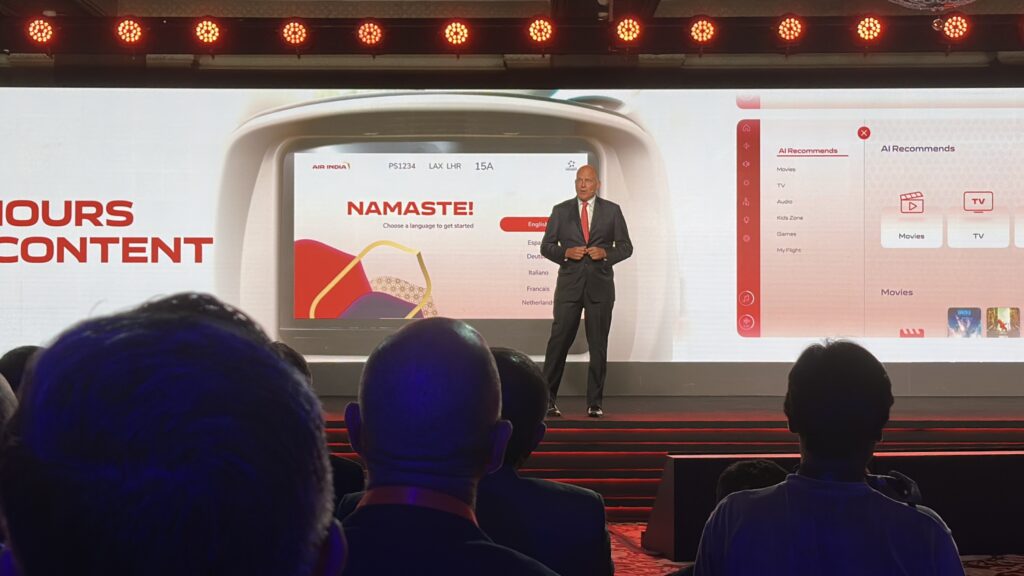
Campbell Wilson at the Brand Identity reveal of Air India (File Photo)
Wilson has apparently agreed to stay on until his successor joins the airline. Who it will be is anyone’s guess. The executive search team already had the mandate, but this significantly shortens the timeline.
Wilson said this,
The four years since Air India’s privatisation have seen the acquisition and successful merger of four airlines, an evolution from public to private sector practices, along with renewal of the leadership team, workforce, culture and ways of operating. It has seen the complete modernization of systems, the launch of new physical products, and deployment of elevated service standards on ground and in the air, as well as 100 additional aircraft added to the fleet. The full interior refit of legacy narrowbody aircraft has all-but been completed, with deliveries of widebody aircraft with new custom-designed interiors now underway.
Critical enabling infrastructure, including South Asia’s largest training academy, two flight simulator facilities, a flying school and a greenfield maintenance, repair and overhaul base, has also been initiated to support the scale, standards and ambition of the new Air India.
With these foundational blocks now settling and a brief window until deliveries from the nearly 600-strong aircraft orderbook commence in earnest from 2027, the time is right for me to hand over the reins for the next phase of Air India’s rise. It has been a true honour to play a small part in this latest chapter of Air India’s long history, and I will continue to be an enthusiastic supporter of this wonderful organisation and its people.
Air India Chairman Mr N Chandrasekaran said,
On behalf of the Board, I wish to record my deep appreciation for Campbell’s leadership and contribution over the past four years. In addition to the progress mentioned above, it is also worth acknowledging the numerous external challenges navigated by the Air India team, including prolonged post-COVID supply chain constraints that have impacted delivery of new aircraft and retrofit programs, as well as major geopolitical and other headwinds. Campbell and his team have demonstrated tenacity and resolve, and have aligned an organisation drawn from many backgrounds behind the shared goal of building the new Air India that is now emerging.
Bottomline
Air India’s CMD Campbell Wilson has resigned and is currently serving his notice period at the airline. While Wilson achieved a lot during his time at the airline, he was also there when a Boeing 787-8 went down for the carrier. Tata Sons had already made up their mind not to offer him a new contract after the current one runs out; however, Campbell seems to have decided to leave on his own terms.
What do you make of Campbell Wilson’s resignation from Air India?
Liked our articles and our efforts? Please pay an amount you are comfortable with; an amount you believe is the fair price for the content you have consumed. Please enter an amount in the box below and click on the button to pay; you can use Netbanking, Debit/Credit Cards, UPI, QR codes, or any Wallet to pay. Every contribution helps cover the cost of the content generated for your benefit.
(Important: to receive confirmation and details of your transaction, please enter a valid email address in the pop-up form that will appear after you click the ‘Pay Now’ button. For international transactions, use Paypal to process the transaction.)
We are not putting our articles behind any paywall where you are asked to pay before you read an article. We are asking you to pay after you have read the article if you are satisfied with the quality and our efforts.


He got a lot of flak for things outside his control. But in terms of the response – Pak airspace was terrible, Iran and 171 was okayish. and communication with regards to the supply chain issues is turning out to be bad. I would’ve hoped they kept him in some role. The Vistara merger was pretty seamless, and domestic is pretty good (apart from the 28in pitch and tray table ads on an FSC).
Apparently they’re going to the US/UK to search for a new one. I don’t understand why they can’t just go to SQ over those mediocre Western airlines. Also, given AIX CEO is also gone, is there a chance that they just get one common CEO? I really hope not. They already don’t differentiate the brands properly.
I differ. AirIndia still doesn’t know how to handle IRROPS, their on-time performance isn’t great at least on the short haul weekly international flight that I take. Flying aircraft without a safety certificate? Sending a plane to Canada which isn’t approved in that country? These are serious lapses that can’t be blamed on supply chain issues. Frankly running a well oiled airline such as SQ (with excellent work culture, high standards etc) is very different from running AI (babudum pro max). They need a tough task master who can cleanup the internal mess and bring some predictability in service levels.
I feel that short-haul international reliability wise is ok. Maybe I’m wrong or you’ve just been unlucky. The product on those it’s too basic, especially considering Asian competition but that’s a different thing. It’s hard to comment on the company culture as outsiders. Most people are post-privatization. The impression I get is that it’s quite similar to other Gurgaon/Mumbai corporate cultures (which I’m not a big fan of, but anyway). Maybe they should realize it’s more professional to not buy fake YouTube videos than wear a tie. But I agree – their operations are not at all resilient. Long-haul reliability is ABSOLUTELY AWFUL. But then I also think that the tech the entire industry uses isn’t great, the wrong aircraft thing happened to AA twice. Take my words how you want, I barely fly them because of how awful their network and international product is.
My guess is US/UK gets preferred because Singapore’s style can come across as too soft or overly polite for Indian babudom and the aviation ecosystem, even though it works very effectively in its own world.
As Manish pointed out, this might be a situation where a tougher taskmaster is actually better suited for AI. The real challenge might be finding someone who combines a global mindset with the ability to execute within Indian realities. That’s rare.
I think what’s really important and hard in India is to make people passionate about what they’re doing. When you’re objective at work is just to impress your boss, I think that’s a problem. My fear is that having a tough guy at the top will just increase the hierarchy.