

The wounds from the AI 171 Crash are still fresh, and the answers are not available (about the final AAIB crash report). Now, we face another incident to handle.
Air India grounds 787-8 after the Captain’s report
A senior Air India pilot flying AI132 from London Heathrow to Bengaluru today identified a “possible defect” in the left fuel control switch on a Boeing 787-8 Dreamliner. The aircraft, registered VT-ANX, landed normally, but the crew’s report led to an immediate grounding and further inspection.
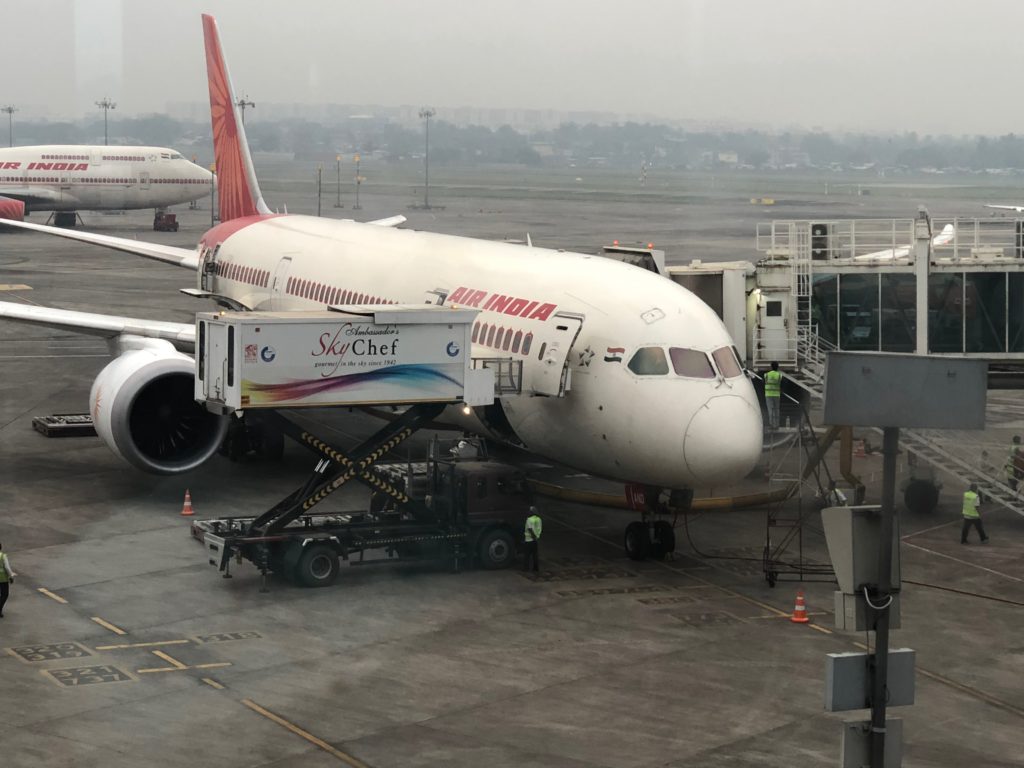
Air India 787-8 (representative image)
This wasn’t a random technical complaint. The switch in question is a fuel control switch — a small yet vital component that controls fuel flow to an engine. If it moves from RUN to CUTOFF, the engine shuts down. The entry in the Air India logbook for the flight read,This wasn’t a random technical gripe. The switch in question is a fuel control switch — a small yet critical component that governs fuel flow to an engine. If it moves from RUN to CUTOFF, the engine shuts down. The entry in the Air India log book for the flight read,
Left Fuel Control Switch slips from Run to Cut Off when pushed down slightly; it does not lock in its position.
This issue was first highlighted by Safety Matters Foundation, which mentioned in its statement that,
The Safety Matters Foundation (SMF) today highlights a serious and recurring safety concern involving Boeing 787 aircraft operated by Air India, following a documented incident on a recent international flight.
On 02 Feb 2026, during the operation of Air India Flight AI132 (London Heathrow to Bengaluru), the crew reported abnormal behaviour of the LEFT engine fuel control switch on Boeing 787-8 aircraft VT-ANX. During engine start, the switch failed to remain locked in the RUN position on two attempts, moving towards CUTOFF, a malfunction that could, under specific conditions, lead to an inadvertent engine shutdown in flight.
This incident is especially alarming as it mirrors a known risk previously identified by the U.S. Federal Aviation Administration (FAA). In 2018, the FAA issued Safety Alert For Operators SAIB NM-18-33, explicitly warning that certain fuel control switches, including those on Boeing 787s, could malfunction in this exact manner, increasing the risk of accidental engine shutdown. The FAA recommended inspection and replacement of affected units.
Air India immediately took the aircraft out of service, notified the Directorate General of Civil Aviation (DGCA), and brought in the aircraft’s manufacturer for detailed checks. The regulator has already been conducting oversight across the airline’s 787 fleet, and — importantly — previous checks after last year’s incident didn’t identify systemic issues.
Air India said in a statement, attributed to a spokesperson,
We are aware that one of our pilots has reported a possible defect on the fuel control switch of a Boeing 787-8 aircraft. After receiving this initial information, we have grounded the aircraft and are involving the OEM to get the pilot’s concerns checked on a priority basis. The matter has been communicated to the aviation regulator, DGCA. Air India had checked the fuel control switches on all Boeing 787 aircraft in its fleet after a directive from the DGCA, and had found no issues. At Air India, the safety of our passengers and crew remains top priority.
Boeing said in a one-line statement,
We are in contact with Air India and are supporting their review of this matter.
Why This Matters More Than It Appears
On the face of it, grounding a 787 after a pilot notices a switch behaving abnormally might seem like overly cautious housekeeping. But there’s a deeper context that gives this moment extra gravity.
In June 2025, a Boeing 787-8 operated by Air India — registered VT-ANB — crashed seconds after takeoff from Ahmedabad, killing over 240 people. The subsequent investigation linked that accident to both engines losing thrust after their fuel control switches moved from RUN to CUTOFF.
That earlier incident — the first fatal 787 crash since the type entered service — didn’t conclusively blame a mechanical defect, but it did focus the spotlight on the fuel control switches. The preliminary accident report noted that one pilot asked why a switch was being cut off, and the other replied he didn’t do it.
Taken together, today’s grounding and that tragic accident make this more than a mechanical curiosity. They raise questions about design, inspection standards, and how often fault indicators reflect real hazards rather than over-sensitivity. In aviation safety, the boundary between excessive caution and necessary vigilance is measured in terms of lives saved rather than cycles flown.
Bottomline
The second instance of fuel cutoff switches on an Air India 787-8 aircraft has come to the fore in the short term. The last time, cutoff of both the switches led to the first known hull loss of a Boeing 787-8 aircraft. This time, it just got logged, thankfully. The plane has been taken out of service for a deeper inspection, and the DGCA has also gotten involved.
What do you make of this incident, happening at Air India in a quick succession to the earlier one?
Liked our articles and our efforts? Please pay an amount you are comfortable with; an amount you believe is the fair price for the content you have consumed. Please enter an amount in the box below and click on the button to pay; you can use Netbanking, Debit/Credit Cards, UPI, QR codes, or any Wallet to pay. Every contribution helps cover the cost of the content generated for your benefit.
(Important: to receive confirmation and details of your transaction, please enter a valid email address in the pop-up form that will appear after you click the ‘Pay Now’ button. For international transactions, use Paypal to process the transaction.)
We are not putting our articles behind any paywall where you are asked to pay before you read an article. We are asking you to pay after you have read the article if you are satisfied with the quality and our efforts.


If it’s a Boeing, you shouldn’t be going.
Hahaha. +1. I was thinking the same thing. I choose Airbus when feasible.
I think Boeing has too much enterprise and sales in it (like Microsoft), unlike Airbus which has superior products and engineering excellence.