

Saudi Arabia’s ambitious new airline, Riyadh Air, has taken delivery of its first two Boeing 787-9 Dreamliners, a major milestone as the carrier prepares to launch commercial passenger operations next month. The aircraft arrived in Riyadh this week after being handed over by Boeing, becoming the first factory-fresh aircraft delivered to the airline.
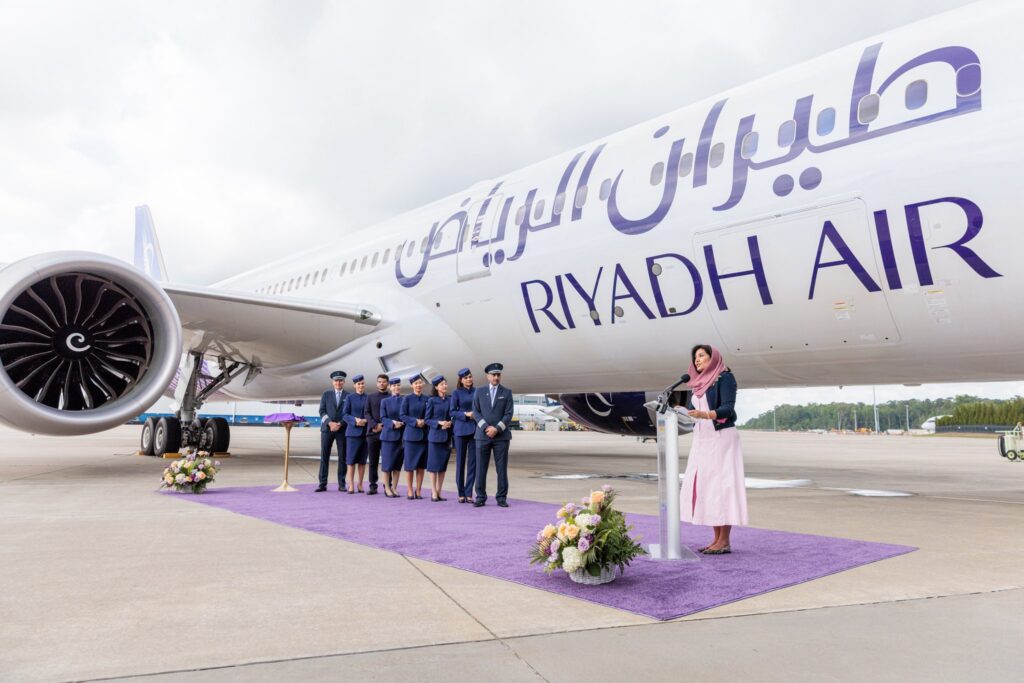
Ambassador of KSA to the US at Boeing CHS during the delivery of the First Boeing 787-9 of Riyadh Air (Image via X/@RiyadhAir)
For Riyadh Air, the arrival of these aircraft represents far more than a routine fleet delivery. It is the culmination of more than three years of planning, aircraft orders, regulatory approvals and brand-building efforts that began when Saudi Arabia’s Public Investment Fund (PIF) unveiled the carrier in March 2023. Oh, and the wait became longer than expected, causing the airline to delay commercial operations.
The First Aircraft Have Finally Arrived
Boeing confirmed the delivery of the airline’s first two 787 Dreamliners on June 5, 2026. The aircraft arrived in Riyadh shortly thereafter, where they will undergo final preparations before entering scheduled service. The deliveries come just weeks before Riyadh Air is scheduled to commence commercial passenger operations, with London Heathrow to become the airline’s first international destination from July 1, 2026.
While Riyadh Air has already been operating a leased Boeing 787 for training, certification, and proving flights, and has also deputed it on the Riyadh – London route these days to keep the slot occupied, these are the first aircraft built specifically for the airline’s passenger network. Until now, the carrier had largely existed as a brand, a loyalty programme, a technology platform and a future promise. Now, it finally has aircraft of its own.
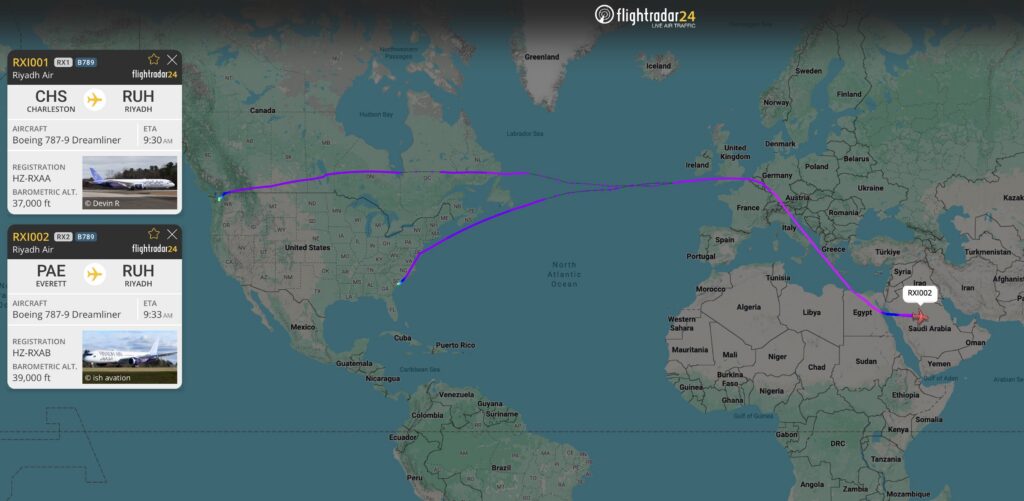
The first aircraft, registered as HZ-RXAA, departed Charleston on June 3, 2026. At the same time, the second aircraft, registered as HZ-RXAB, departed Everett, both bound for Riyadh. Both aircraft arrived in tandem in Riyadh on June 4, 2026, escorted by the Saudi Hawks.
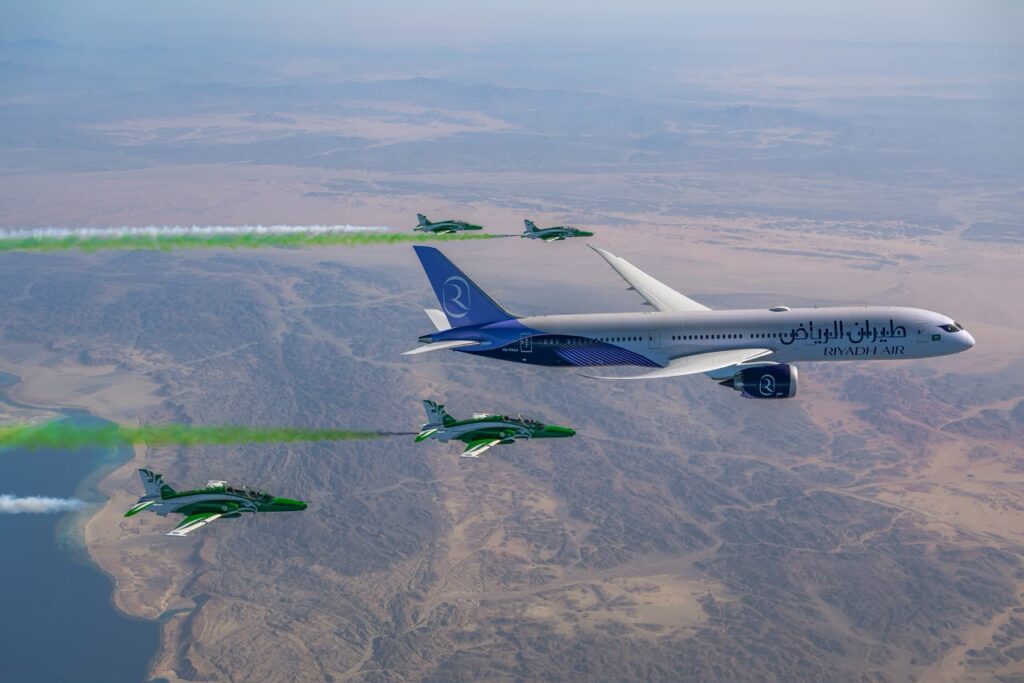
A USD 37 Billion Bet On Saudi Arabia’s Aviation Ambitions
The Boeing 787-9 has been at the heart of Riyadh Air’s strategy from day one. When the airline was announced in 2023, it announced one of the largest aircraft orders ever placed by a startup carrier: 39 Boeing 787-9 Dreamliners, along with options for another 33, bringing the potential order book to 72 widebody jets.
At the time, the order formed part of a broader Saudi aviation push that also included significant fleet growth at Saudia. The transaction was viewed as one of Boeing’s largest commercial wins in recent years and a key component of Saudi Arabia’s Vision 2030 programme.
Riyadh Air’s fleet plan has expanded since then. The airline has already ordered Airbus A321neos for regional operations and has committed to Airbus A350-1000 aircraft for future long-haul expansion. However, the Boeing 787 remains the backbone of its initial international network.
Why The Boeing 787 Matters
For a startup airline, the Boeing 787 is arguably the ideal aircraft.
The Dreamliner offers long-range capabilities, relatively low operating costs, and the flexibility to serve both medium-haul and ultra-long-haul markets profitably. Airlines worldwide have used the type to open routes that would have been uneconomical with larger aircraft.
Riyadh Air plans to use the 787-9 across both regional and long-haul markets, connecting Saudi Arabia to destinations across Europe, Asia, Africa and North America. Boeing says the aircraft will play a central role in helping the carrier build a network of more than 100 destinations by 2030.
The aircraft also allows Riyadh Air to position itself as a premium carrier from day one. The airline has already unveiled one of the most talked-about cabin products in recent years, featuring enclosed Business Elite suites, fully flat business-class seats, premium economy, and high-speed connectivity throughout the aircraft.
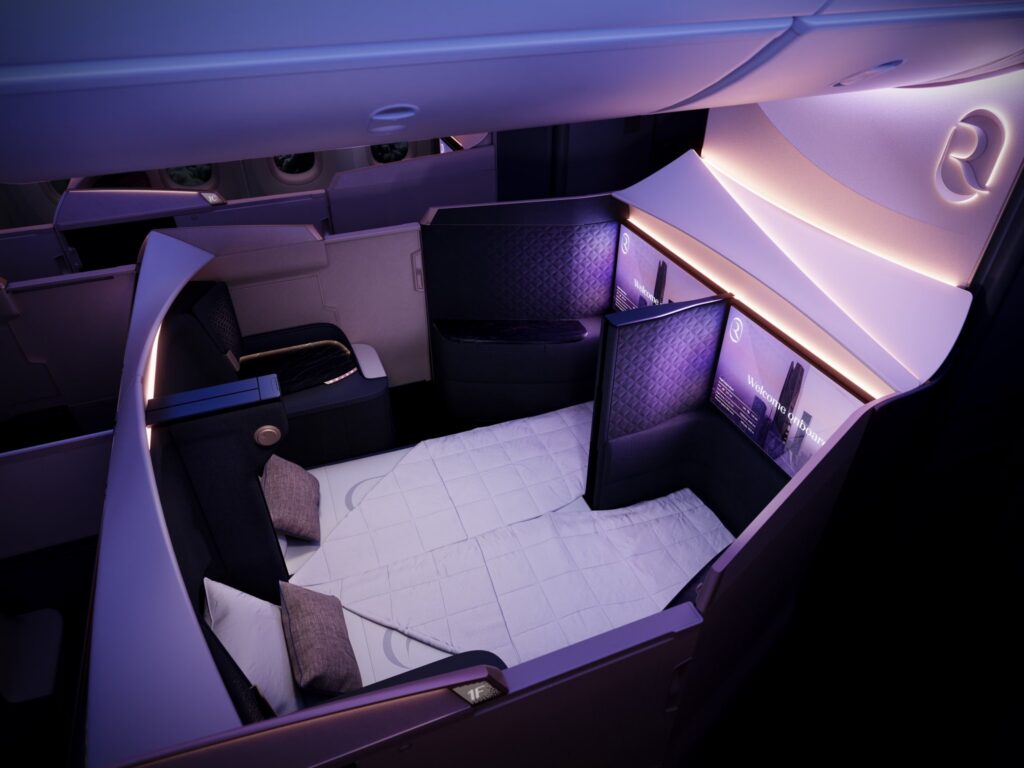
Riyadh Air’s Business Class
The Competitive Challenge Ahead
While the aircraft’s arrival is a significant achievement, the harder work begins now. Riyadh Air enters one of the most competitive regions in global aviation. It will compete directly with established Gulf giants, including Emirates, Qatar Airways and Etihad Airways, all of which have spent decades building global networks and premium reputations.
At the same time, Riyadh Air enjoys substantial advantages. It has government backing, a rapidly growing home market, a new airport ecosystem under development in Riyadh and a strategic geographic location between Europe, Asia and Africa.
Saudi Arabia’s broader aviation strategy aims to attract 150 million visitors annually and handle 330 million passengers by 2030, with Riyadh Air expected to play a central role in achieving those targets.
The next few weeks will be crucial for Riyadh Air. The airline will place the newly delivered Boeing 787-9s into commercial service on the Riyadh–London Heathrow route beginning July 1, 2026, marking the start of passenger operations. Additional destinations are expected to follow rapidly as more aircraft join the fleet.
For aviation enthusiasts, the arrival of these first two Dreamliners is significant because it transforms Riyadh Air from a future airline into an operating carrier. After years of aircraft orders, marketing campaigns, and grand ambitions, passengers will soon be able to judge the airline based on what matters most: the onboard experience.
Bottomline
Boeing has delivered Riyadh Air’s first two Boeing 787-9 Dreamliners, giving the Saudi startup carrier its first factory-new aircraft ahead of its planned July 2026 passenger launch. The deliveries are the first step in what could eventually become a fleet of up to 72 Dreamliners and mark the beginning of Riyadh Air’s attempt to establish itself as a major global airline and support Saudi Arabia’s Vision 2030 aviation ambitions.
What do you think of the ambition of Riyadh Air?
Liked our articles and our efforts? Please pay an amount you are comfortable with; an amount you believe is the fair price for the content you have consumed. Please enter an amount in the box below and click on the button to pay; you can use Netbanking, Debit/Credit Cards, UPI, QR codes, or any Wallet to pay. Every contribution helps cover the cost of the content generated for your benefit.
(Important: to receive confirmation and details of your transaction, please enter a valid email address in the pop-up form that will appear after you click the ‘Pay Now’ button. For international transactions, use Paypal to process the transaction.)
We are not putting our articles behind any paywall where you are asked to pay before you read an article. We are asking you to pay after you have read the article if you are satisfied with the quality and our efforts.


Leave a Reply