

IndiGo’s fledgling expansion into Europe has run into a significant setback. The airline’s long-haul flights operated with Boeing 787-9 Dreamliners leased from Norse Atlantic Airways have effectively been grounded amid escalating geopolitical tensions in West Asia and resulting airspace closures across the region.
IndiGo halts widebody operations due to the Middle East conflict
What began as a geopolitical shock has quickly become an operational crisis for airlines worldwide, and IndiGo’s long-haul operations appear to be among the most affected.
The trigger for the disruption is the rapidly escalating conflict involving Iran, which has led to widespread closure of airspace across large parts of the Middle East. Countries including Iran, Iraq, Israel, Kuwait, Qatar and the UAE have restricted or shut their skies after military strikes in late February, creating a massive gap in one of the world’s busiest aviation corridors.

Current Aerospace Closures via FlightRadar24
This corridor is critical for flights connecting South Asia and Europe. With it suddenly unavailable, airlines have been forced to either cancel services or take significantly longer routes around the region.
For IndiGo, the consequences have been immediate. The airline has scrapped a tonne of flights since the conflict escalated, particularly on routes touching the Middle East and Europe.
The Norse Atlantic connection
The disruption is particularly significant because IndiGo’s Europe flights are currently built around aircraft that do not actually belong to the airline. As part of its strategy to accelerate its long-haul ambitions, the airline operates long-haul flights with Boeing 787-9 Dreamliners leased from Norse Atlantic Airways. Under this arrangement, Norse provides the aircraft, pilots, and maintenance, while IndiGo supplies the cabin crew and sells tickets for the flights.
The arrangement allowed IndiGo to begin long-haul operations years before the arrival of its own widebody aircraft. The airline has ordered Airbus A350-900 aircraft for delivery starting in 2027, and the Norse partnership was meant to serve as a bridge to that future fleet while helping IndiGo test European markets such as London, Paris and Amsterdam. Eventually, the plan expanded to as many as six Boeing 787 aircraft operating under the Norse partnership.
That strategy now faces a sudden pause.
Why are the European flights grounded?
The immediate issue is that the conflict has effectively made the traditional India–Europe routing via West Asia unusable. Aviation authorities and governments across the region have closed airspace or warned airlines against operating there, forcing carriers to suspend flights or attempt longer detours via alternative corridors.
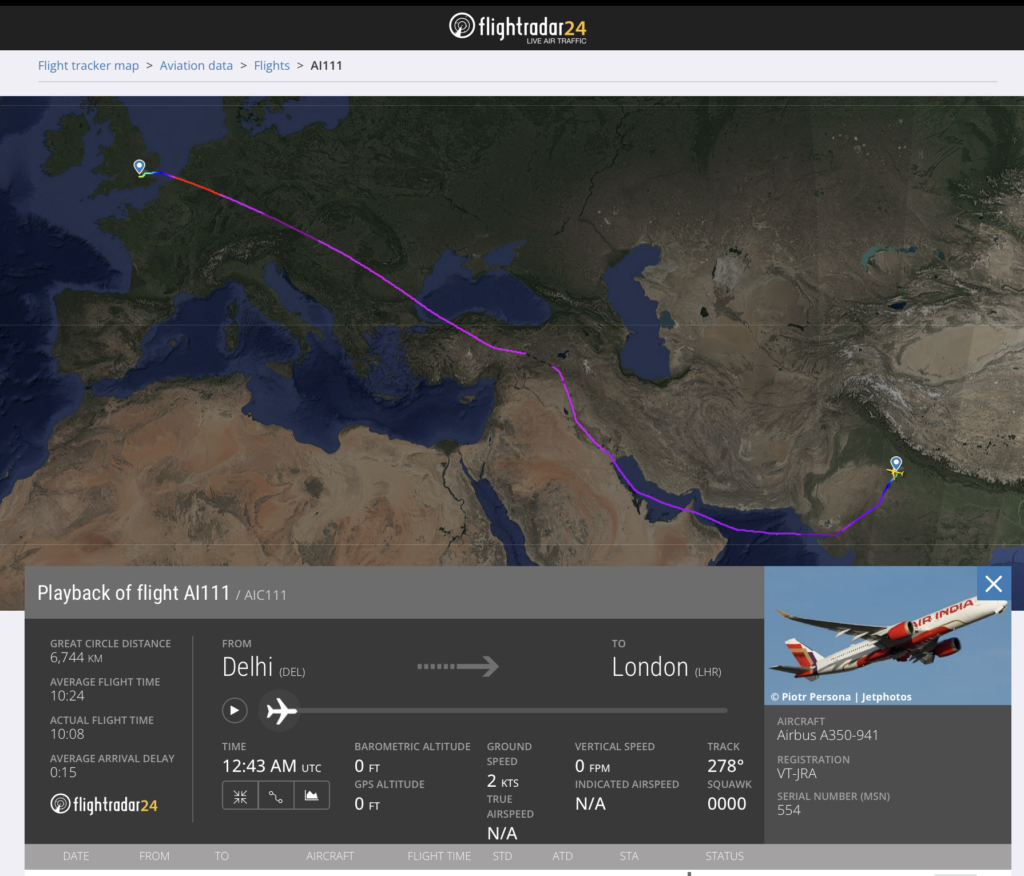
AI 111 DEL-LHR on February 17, 2026
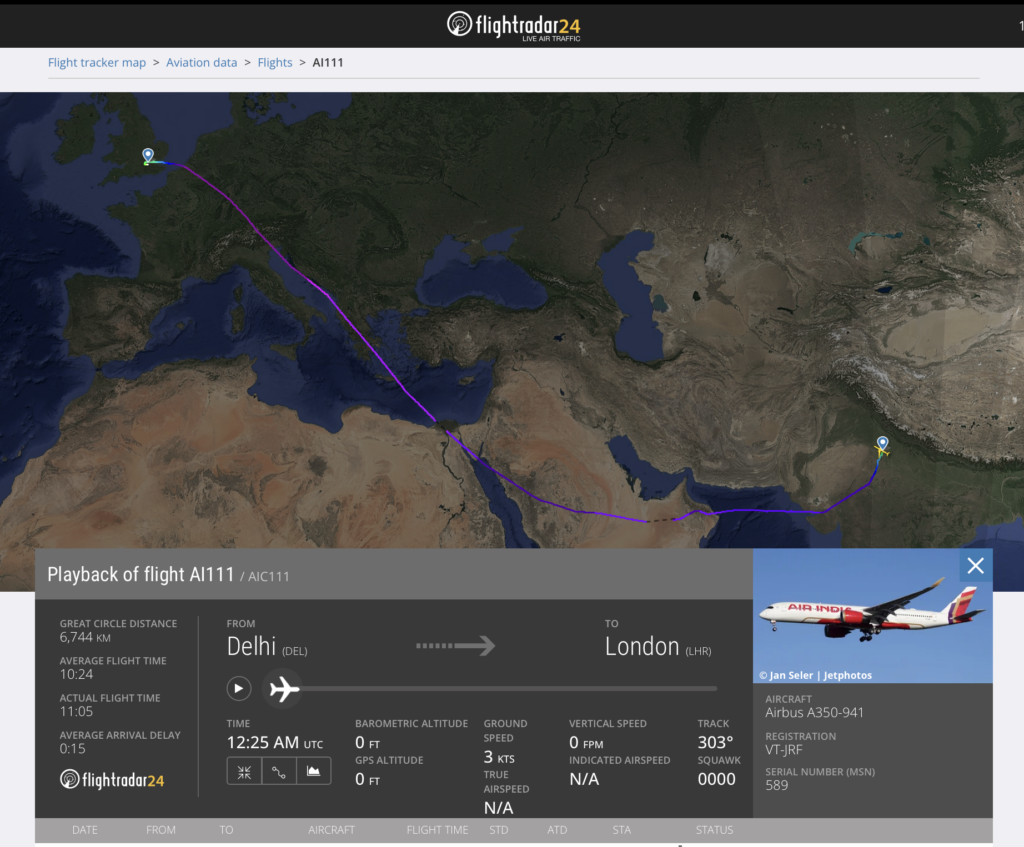
AI 111 DEL-LHR on March 5, 2026
The scale of the disruption is enormous. Thousands of flights have been cancelled globally, and major aviation hubs such as Dubai and Doha have experienced significant operational shutdowns during the crisis.
For airlines like IndiGo, the situation becomes even more complicated because IndiGo’s Dreamliners are operated through Norse Atlantic under an ACMI or dry-lease arrangement. The aircraft remain under Norse’s regulatory oversight, meaning operational decisions and risk assessments are influenced by the regulatory environment governing the Norwegian carrier.
Norse Atlantic itself has confirmed that the six Boeing 787-9 aircraft placed with IndiGo are currently grounded, with the ACMI operation temporarily suspended due to the airspace restrictions across the Middle East. The aircraft remains under contract, and the two airlines are working on potential alternative routings to resume operations.
The disruption highlights the fragile nature of IndiGo’s early long-haul expansion strategy. Unlike established long-haul carriers, IndiGo is still in the early stages of building a widebody network. Its European services rely on a small number of leased aircraft and highly optimised routing across West Asia.
Even before the current crisis, the airline had already begun trimming parts of its European schedule due to operational constraints and the limited size of its temporary widebody fleet. When the Middle East airspace corridor suddenly became unavailable, the network quickly unravelled.
A wider aviation crisis
IndiGo is far from alone. The conflict has triggered one of the largest aviation disruptions since the pandemic, with airlines worldwide scrambling to reroute flights or suspend services altogether.
More than half of the flights scheduled to operate to and from the Middle East since late February have reportedly been cancelled, leaving thousands of passengers stranded and forcing airlines to redesign their networks almost overnight. Even airlines not directly flying to the region are feeling the impact, because the Middle East sits at the crossroads of global aviation between Europe, Asia and Africa.
What happens next?
For IndiGo, the suspension of its Europe operations is likely to remain temporary — but the timeline for a restart will depend almost entirely on geopolitics rather than airline planning. If airspace across the Middle East gradually reopens, IndiGo could quickly bring the Norse-operated Dreamliners back into service and resume flights to Europe. But until the airline begins receiving its own Airbus A350 fleet later in the decade, its long-haul expansion will remain dependent on leased aircraft and the stability of global air corridors.
In other words, IndiGo’s European ambitions are still very much in the experimental phase — and this crisis has shown just how vulnerable that early stage can be when geopolitics suddenly redraws the map of the skies.
Update: It is being reported that IndiGo intends to restart operations with these aircraft effective March 8, 2026.
Bottomline
IndiGo has been unable to operate flights between India and Europe using the Norse Atlantic damp-leased 787-9 aircraft for a week now. This inability will continue as long as the European airline regulator deems it unfit to traverse the airspace over the Middle East. It is expected that March 8, 2026 onwards, these flights are back in the air.
What do you make of the current inability of IndiGo to operate most flights to Europe?
Liked our articles and our efforts? Please pay an amount you are comfortable with; an amount you believe is the fair price for the content you have consumed. Please enter an amount in the box below and click on the button to pay; you can use Netbanking, Debit/Credit Cards, UPI, QR codes, or any Wallet to pay. Every contribution helps cover the cost of the content generated for your benefit.
(Important: to receive confirmation and details of your transaction, please enter a valid email address in the pop-up form that will appear after you click the ‘Pay Now’ button. For international transactions, use Paypal to process the transaction.)
We are not putting our articles behind any paywall where you are asked to pay before you read an article. We are asking you to pay after you have read the article if you are satisfied with the quality and our efforts.


Jeez, they’re taking Somali airspace. DEL-MAN is currently turning back (it may just be some spoofing). It might’ve been better if they had started East Asia/Australia. They would’ve been able to induce demand with their low fares, but then I guess Norse obligations and SkyTeam said Europe. At least they moved some to BOM, unlike Air Delhi (which continues to delay flights that already have horrible refueling stops, check AI174 for example).
I reckon their handling of the disruption has dealt a blow to their reputation, especially for international passengers stranded in India and SE Asia.
For the flights already cancelled, do they owe a Duty of Care to the passengers affected? In terms of giving them alternative bookings and/or hotel accommodations?
Being completely silent and not offering any Plan B support will bleed trust.
Exactly. If you don’t have the proficiency for disruption management, then don’t spread your wings into International skies. You can’t treat International passengers the same way you neglect the domestic passengers
EASA will review on March 11th
Don’t you have that update ?
@Jas there is already an update in the article