

Yesterday, a new incident involving the Air India Boeing 787-8 brought the Fuel Control Switches back into focus. The incident in focus occurred before the start of the London Heathrow to Bengaluru flight (AI132) on February 2, 2026. The flight was operated, and the issue was logged in Bengaluru. Here is the log entry.
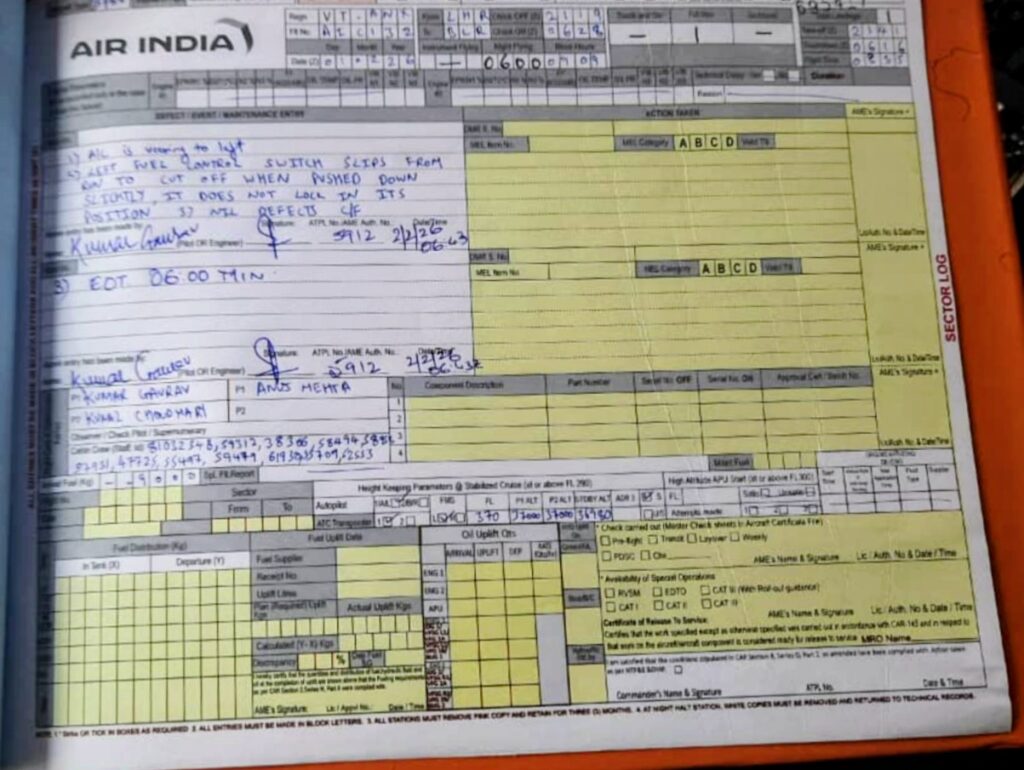
DGCA clarifies that no problem with the plane is noted
Yesterday, Air India notified the DGCA (the Indian aviation regulator) of the newly discovered incident and requested assistance from Boeing to identify the problem. The DGCA issued a rejoinder today, to the effect.
Rejoinder on News Item relating to purported malfunction of Fuel Cut OFF Switch on M/s Air India Boeing B787-8 aircraft VT-ANX pic.twitter.com/1CooavYvoI
— DGCA (@DGCAIndia) February 3, 2026
It reads as follows,
On 01.02.2026, Air India B787-8 aircraft VT-ANX operated flight Al 132 (London- Bangalore). During engine start in London, on two occasions crew observed that the fuel control switch did not remain positively latched in the “RUN” position when light vertical pressure was applied. On the third attempt, the switch latched correctly in “RUN” and subsequently remained stable. Before continuing with the rest of procedure, a physical verification was performed by the crew to confirm that the switch was fully and positively latched in the “RUN” position. No abnormal engine parameters, cautions, warnings, or related system messages were observed during engine start or at any time thereafter. The operating crew member was briefed on the observation, unnecessary contact with the switch was avoided, and engine indications and alerting systems were closely monitored by the crew for the remainder of the flight. The flight was completed without incident.
After landing at Bangalore, crew reported the defect in the PDR. Air India referred the matter to M/s Boeing for further guidance. Based on the M/s Boeing recommended checks to establish the serviceability of fuel control switch, M/s Air India engineering observed that: “Both left and right switches were checked and found satisfactory, with the locking tooth/pawl fully seated and not slipping from RUN to CUTOFF. When full force was applied parallel to the base plate, the switch remained secure. However, applying external force in an incorrect direction caused the switch to move easily from RUN to CUTOFF, due to the angular base plate allowing slip when pressed improperly with finger or thumb.”
In addition, based on Boeing’s communication, the pull-to- unlock force was checked on the fuel control switch using the recommended procedure on the involved fuel cut off switch, the fuel control unit to be installed and fuel cut off switch of another aircraft. In all cases the pull-to-unlock force was found within limits. These inspections were carried out in the presence of DGCA officers.
Although it remains questionable why the pilots did not refuse to operate the flight, given the issue and history with the 787-8 Fuel Cutoff Switches, was it someone in the OCC who gave the go-ahead for the flight? Or did the pilots even call the OCC to check for further instructions when the issue was discovered?
Bottomline
The second instance of fuel cutoff switches on an Air India 787-8 aircraft came to the fore yesterday. The airline has been given DGCA clearance to operate the aircraft, based on a check of the switch conducted in the presence of the DGCA, and no issues have been identified.
What do you make of this incident?
Liked our articles and our efforts? Please pay an amount you are comfortable with; an amount you believe is the fair price for the content you have consumed. Please enter an amount in the box below and click on the button to pay; you can use Netbanking, Debit/Credit Cards, UPI, QR codes, or any Wallet to pay. Every contribution helps cover the cost of the content generated for your benefit.
(Important: to receive confirmation and details of your transaction, please enter a valid email address in the pop-up form that will appear after you click the ‘Pay Now’ button. For international transactions, use Paypal to process the transaction.)
We are not putting our articles behind any paywall where you are asked to pay before you read an article. We are asking you to pay after you have read the article if you are satisfied with the quality and our efforts.


Leave a Reply